JMSDF Museum, Sasebo
| Location | 8-1 Uwamachi, Sasebo, Nagasaki Prefecture, Japan |
|---|---|
| Visited | 4 Oct 2026 |
| Website | JMSDF Museum, Sasebo |
Museum Report
The naval base at Sasebo in western Kyushu has a long history dating back to 1883. After WW2, the base was taken over by the US Navy and became a major support facility during the Korean and Vietnam wars. Today it is operated as a shared base with both US and Japanese warships based there.
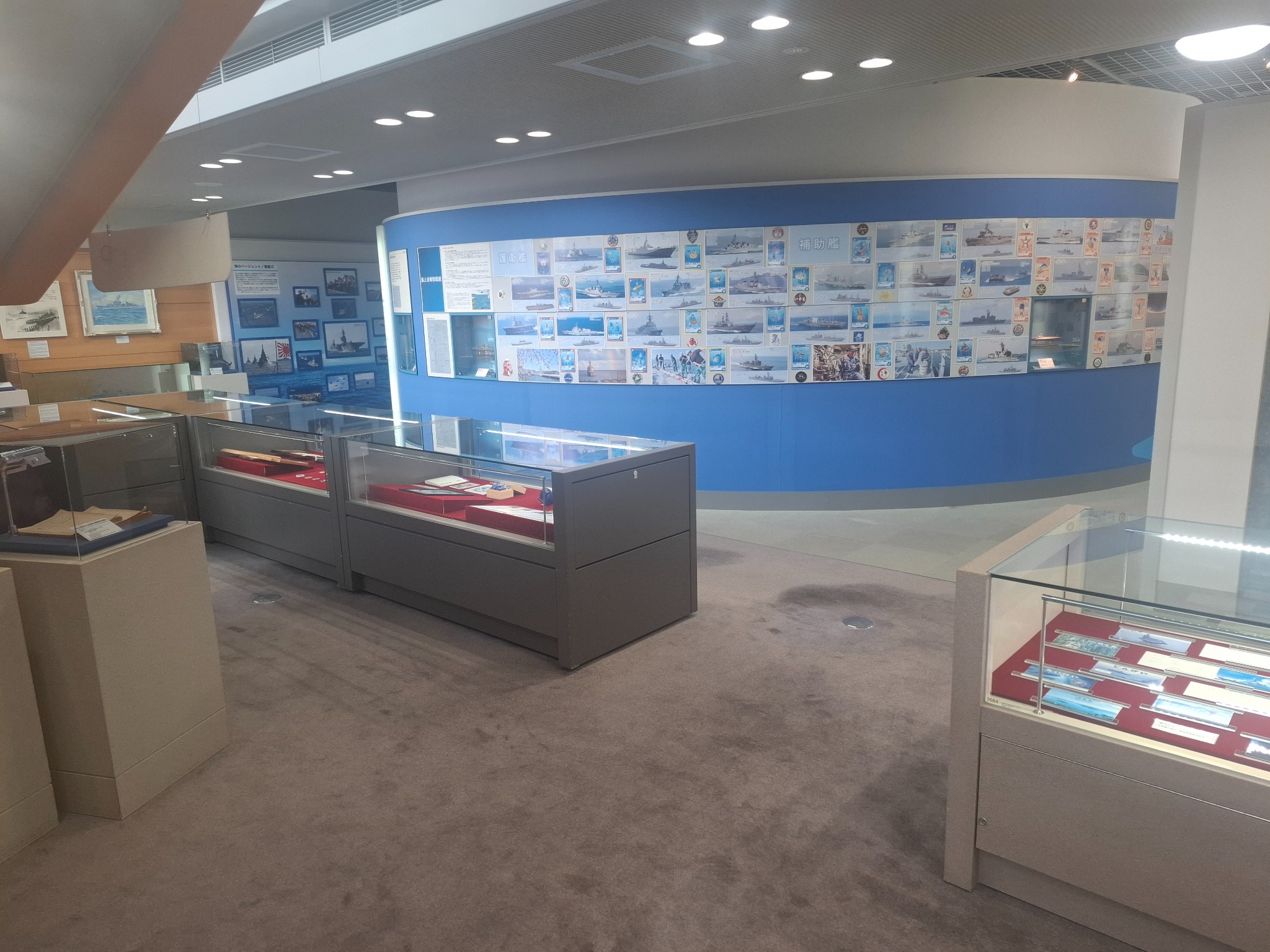
The JMSDF Museum in Sasebo is located about 2km from the base area and railway station in a 7 story building. The floor galleries are themed – you start on the 7th floor which has a viewing area looking out over the harbour and city plus an introductory movie on current JMSDF activities (incidentally exactly the same movie they show you while you are waiting for the tour at the Etajima Naval Academy Museum). The 6th, 5th and 4th floor galleries trace the history of the IJN from the 19th century, through the Russo-Japanese War and the Pacific War. The 3rd floor covers post-war ships of the JMSDF. The 2nd floor covers community relations and public-service activities of the JMSDF, while the 1st floor houses the gift shop and reception area.
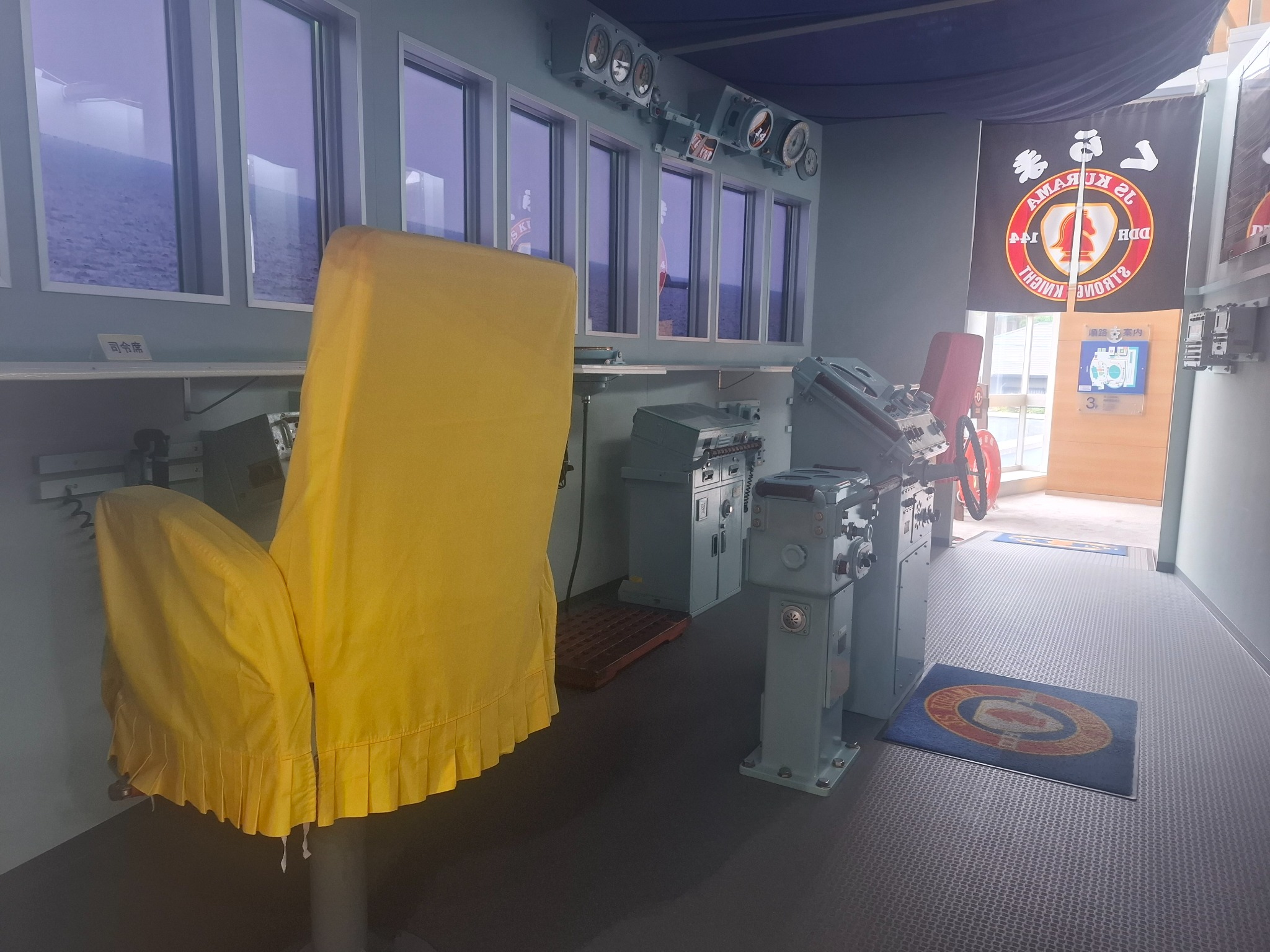
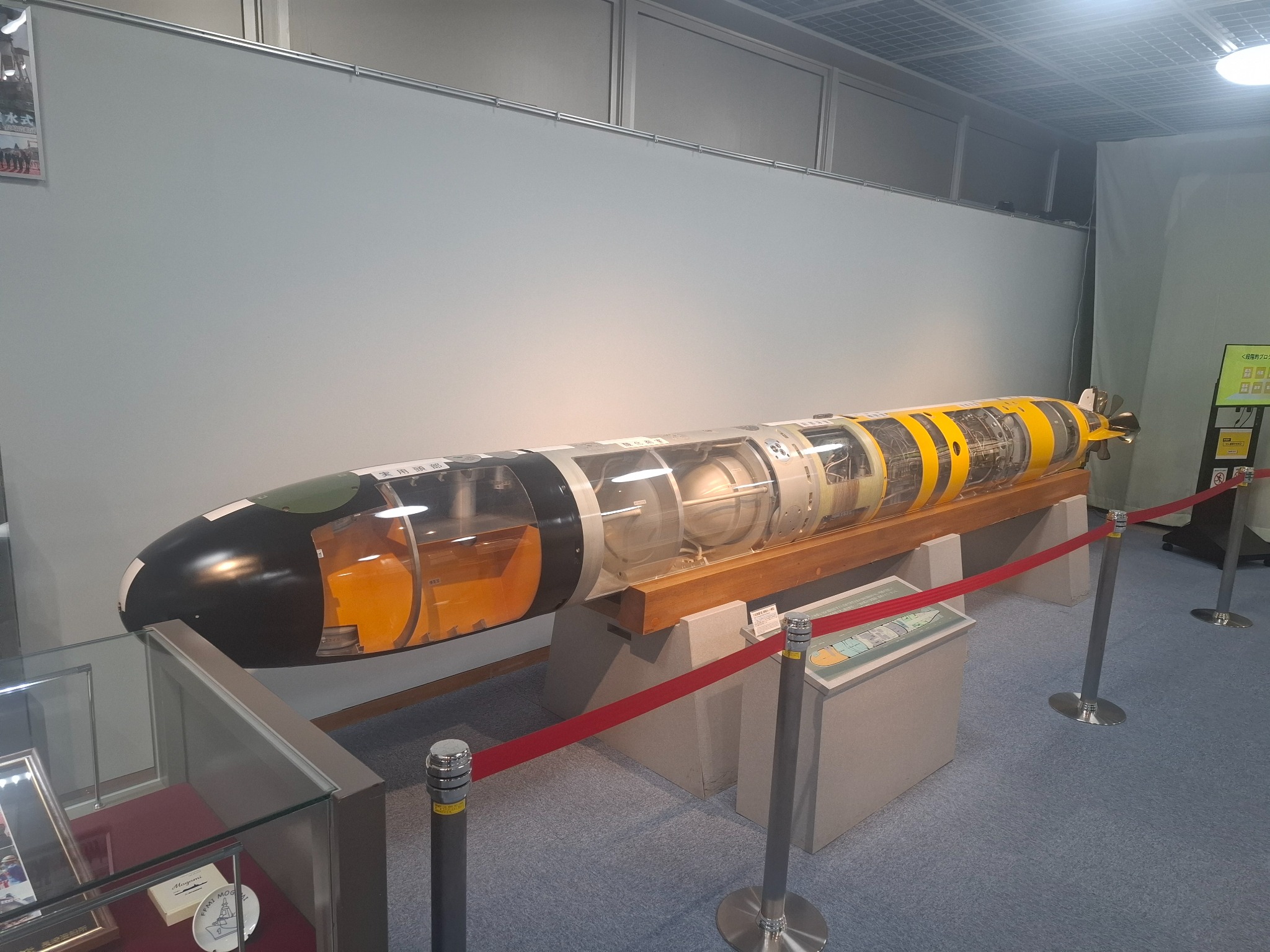
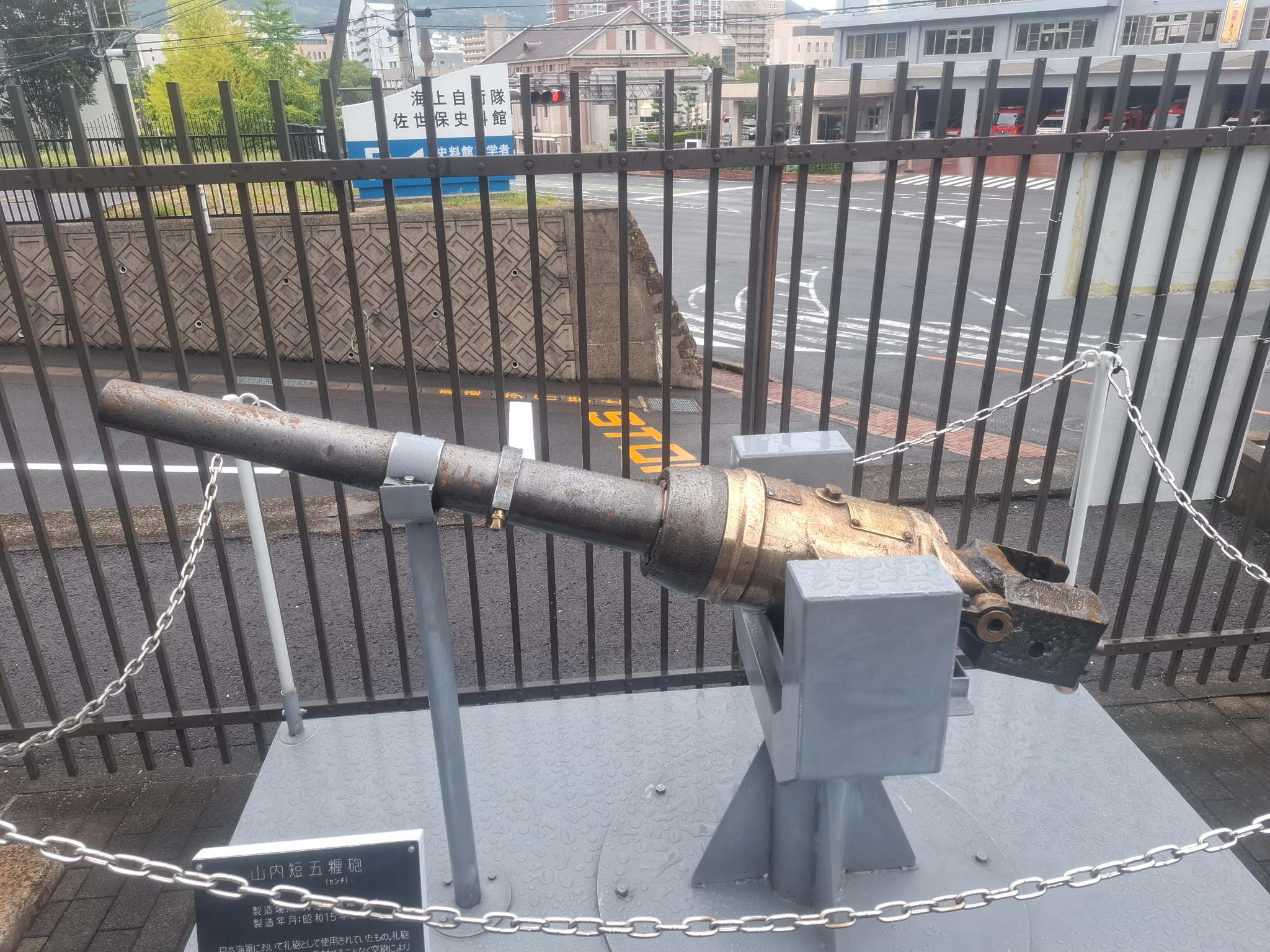
As a general rule, the museum consists predominantly of information boards and models, with relatively few actual artifacts, particularly from the IJN era. They did, however, have a bridge simulator which was constructed from equipment from the decommissioned training ship JS Kurama, and a couple of torpedoes, while they had an anchor and a small gun outside. Signage in the museum was largely bilingual – which has been achieved by adding supplementary English Language placards adjacent to most of the existing information boards.
There was a blanket prohibition on photography on the three floors covering the IJN era. This was disappointing – I can understand them not wanting specific exhibits (e.g. calligraphy and personal letters) photographed, but it seemed over the top extending that restriction to all of the information boards and graphics presented in the galleries.
The gift shop was reasonably well stocked with themed clothing and souvenirs. Entry to the museum was free. There is apparently a bus that can take you from the downtown/railway station area of Sasebo to the museum – but it is a relatively easy walk, most of which is through a linear shopping plaza about 1.5km long.
All in all – I was disappointed with the museum. The information boards and models were moderately interesting – but didn’t really contain anything you couldn’t get just by reading a book, and being unable to photograph them limited their value. If you happen to be in Sasebo, it is probably worth a walk-through, but I regret travelling from the other side of Kyushu just to visit it.